Using Real-World DevOps Tools
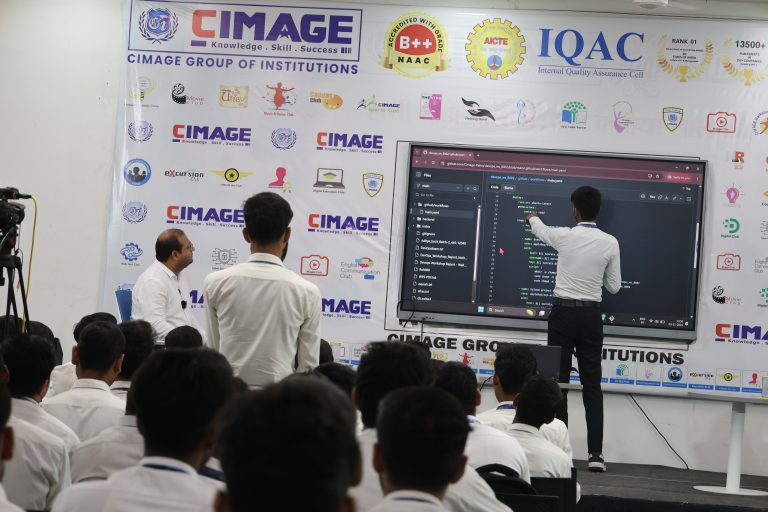
This program focuses on building, automating, and deploying applications using real-world DevOps tools. Students gain practical exposure to modern development pipelines and industry-standard practices.
Designing and building scalable software applications.
Automating testing, integration, and deployment processes.
Deploying applications on cloud platforms.
Managing performance, security, and reliability.
Learning DevOps workflows used in IT companies.
With DevOps skills, students become ready for roles such as DevOps Engineer, Cloud Engineer, System Administrator, and Automation Specialist. These skills are highly demanded in the IT industry.
βLearn to build, automate, and deploy applications efficiently with industry-grade DevOps tools and prepare yourself for future-ready IT careers.β
Center of Digital Technology & Entrepreneurship
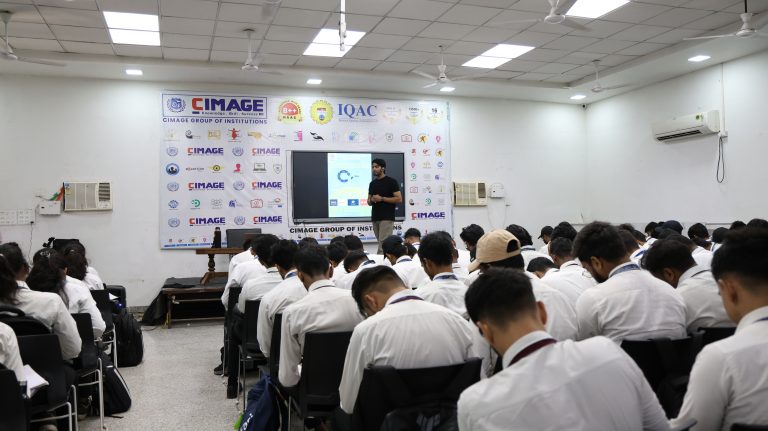
DevOps has become one of the most in-demand skill sets across global IT companies. At CIMAGE Center of Digital Technology & Entrepreneurship, the DevOps workshop is structured to give students practical exposure to tools, workflows, and best practices used by top technology firms.
The training emphasizes real-time implementation, helping students understand how software moves from code to production efficiently and securely.
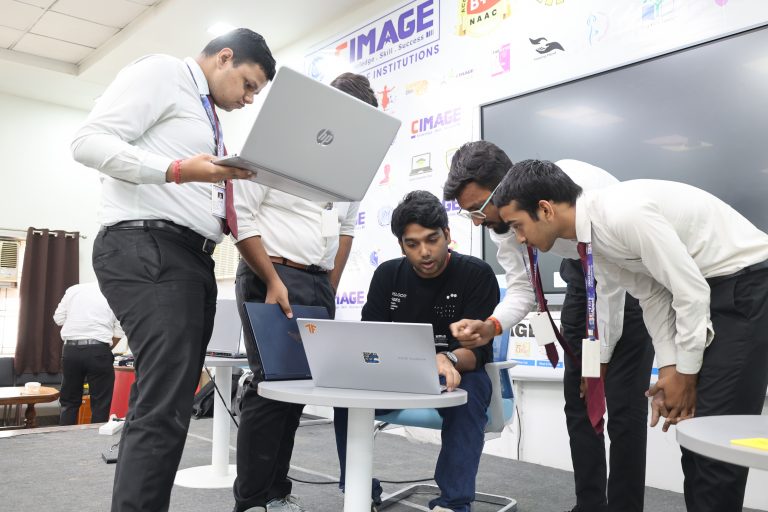
The DevOps workshop follows a practical learning model where students work on live environments and real use cases. From setting up containers and automating builds to deploying applications on the cloud and monitoring system performance, students gain complete lifecycle experience.
Working on real-time systems and servers.
Automating builds, testing, and deployments.
Deploying applications on cloud platforms.
Tracking performance and system health.
From code development to production release.
This hands-on approach ensures students develop confidence in handling DevOps tools independently and prepares them for real-world IT careers with strong technical and practical skills.
Docker β’ Kubernetes β’ Jenkins β’ Terraform
Students begin their DevOps journey by learning Docker and containerization. They understand how applications are packaged into lightweight, portable containers that run consistently across environments.
The training focuses on building Docker images, managing containers, and deploying applications efficiently, helping eliminate dependency issues.
In the Kubernetes module, students learn how to automate the deployment, scaling, and management of containerized applications.
Core concepts such as clusters, pods, services, and deployments are introduced through practical sessions in production-like environments.
The Jenkins workshop trains students in building automated CI/CD pipelines that integrate code building, testing, and deployment.
Students learn how continuous integration and delivery improve software quality, reduce deployment time, and increase development efficiency.
Automatic code building and testing.
Fast and reliable deployments.
Improved software reliability.
Enterprise-level automation skills.
Infrastructure automation is a key DevOps skill. In the Terraform workshop, students learn how to define and manage cloud infrastructure using declarative configuration files.
This module introduces Infrastructure as Code (IaC), enabling learners to create, modify, and scale cloud environments with confidence.
Manage infrastructure through code.
Automated cloud setup and scaling.
Quick and consistent environments.
Reliable infrastructure control.
These advanced DevOps workshops empower students with industry-ready skills in containerization, automation, cloud infrastructure, and deployment pipelines β preparing them for successful IT careers.
Automation β’ Cloud β’ Monitoring
This workshop introduces students to GitHub Actions, enabling them to automate software development workflows directly from GitHub repositories.
Students learn how to trigger builds, run tests, and deploy applications automatically whenever code changes are pushed, making development faster and more reliable.
Cloud computing is central to modern DevOps practices. The AWS DevOps workshop focuses on implementing CI/CD pipelines, deployment strategies, and DevOps best practices on the AWS cloud platform.
Students gain exposure to cloud services, security practices, and scalable deployment models widely used in the IT industry.
Automated build and deployment on AWS.
Cloud security and access management.
High-performance cloud infrastructure.
Industry-standard AWS DevOps services.
To ensure application reliability, students learn system monitoring and alerting using Prometheus and Grafana.
This module teaches how to track application performance, visualize metrics, and set alerts to detect issues before they impact users.
Monitor application health in real-time.
Create dashboards with Grafana.
Detect problems early.
Maintain reliable systems.
With automation, cloud deployment, and advanced monitoring skills, students become industry-ready DevOps professionals prepared for high-demand IT careers.
Industry-Oriented Learning at CIMAGE
The DevOps Add-On Course at CIMAGE covers the complete ecosystem of CI/CD, containers, cloud deployment, infrastructure automation, and monitoring.
By the end of the training, students develop a strong understanding of DevOps culture, tools, and workflows aligned with industry expectations.
This workshop is ideal for students from technology-oriented programs who wish to build careers in modern IT infrastructure and automation.
With DevOps training, students gain a competitive advantage in placements, internships, and higher studies.
Managing CI/CD and automation pipelines.
Designing scalable cloud systems.
Automating development workflows.
Optimizing infrastructure operations.
Ensuring system reliability.
The DevOps Workshop reflects CIMAGEβs commitment to delivering future-ready education.
By combining strong academics with advanced Add-On Courses and hands-on industry training, CIMAGE ensures students become skilled professionals ready for real-world IT challenges.
βAt CIMAGE, education goes beyond degrees β we build confident, skilled, and industry-ready IT professionals.β